
Equipment / Scrap shredding & magnetic iron removal
Scrap shredding and magnetic iron-removal line
A waste and scrap shredding line with magnetic iron removal: size and volume reduction, then ferrous metal recovery, so shredded material can be recycled or processed further. Configuration is quoted per material. Price on request.
Price on request. Equipment lists on this site show names, sizes and quantities from our reference designs; commercial terms are confirmed in writing after engineering review.
What this shredding and magnetic separation line does
Waste, scrap metal and other discarded items arrive in mixed, bulky form. A scrap recycling line first reduces that feed with a shredder or scrap crusher, then uses a magnetic separator for the shredder stream to take out iron and steel. The same idea applies to a waste shredding line, a scrap processing line, or a scrap crushing and magnetic separation line: volume reduction, tramp iron removal, and a cleaner discharge.
Magnet China designs the line around the material you actually run — not a single catalogue package. Shaft type, magnet style and screening are selected after we see your feed, capacity and output-size target. Send those three items for a complete shredding line proposal and quotation.
Typical process flow
A usual arrangement is a feeding conveyor, a shredder or crusher, a conveyor with an overband self-cleaning belt magnet or a magnetic pulley, then screening and discharge. Stages are added or omitted to match the material.
- 1 · FeedingA feeding conveyor (and, where needed, a hopper or loader) brings scrap or waste into the shredder at a steady rate.
- 2 · Shredding or crushingA pre-shredder or primary shredder reduces bulky feed. A secondary shredder is used only when a smaller, more uniform size is required.
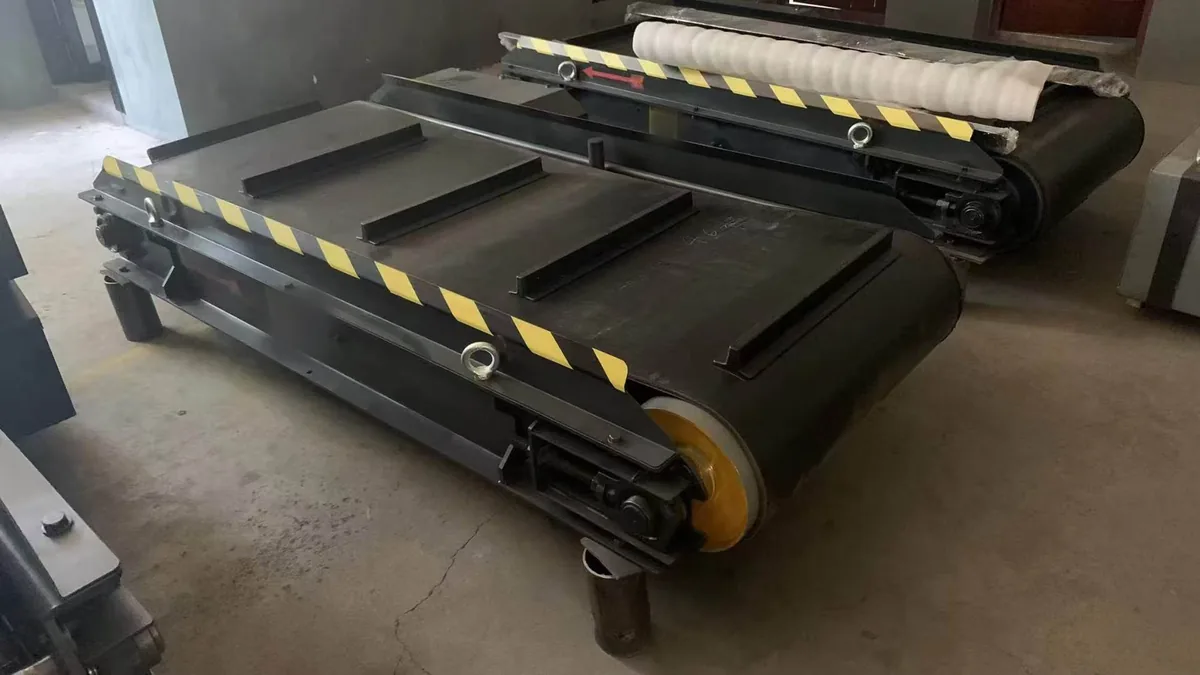
- 3 · Magnetic iron removalA conveyor with overband magnet — or a magnetic pulley at the head drum — lifts ferrous metal from the shredded bed for separate discharge. This is the iron removal and ferrous recovery stage.
- 4 · Screening after shreddingA screen can split oversize for return to the shredder and send the target fraction forward.
- 5 · DischargeShredded product and the recovered iron leave on separate discharge conveyors, ready for the next process or for despatch.
Functional schematic, not an engineering flowsheet. Layout, drives and controls are confirmed in the technical proposal.
Equipment in the line
The units below are the usual building blocks of scrap recycling equipment and waste processing equipment. We do not list invented model codes or capacities here. Each item is sized from your material.
| Unit | Role in the line |
|---|---|
| Double shaft / twin shaft / two shaft shredder | Low-speed, high-torque shear shredder used as a heavy duty pre-shredder or primary shredder for bulky or mixed waste. A hydraulic shredder drive can be discussed where the feed needs it. |
| Single shaft shredder | A single shaft shredder with screen, used when size reduction must be held to a defined particle size for the next stage. |
| Four shaft shredder | A four shaft shredder machine is considered when the project needs both a strong grab of bulky feed and a more uniform output. |
| Hammer mill crusher | A scrap hammer mill may be added as a secondary stage for further liberation or sizing. It is not required on every line. |
| Plastic crusher | Where the duty is plastics rather than mixed scrap, a plastic crusher or plastic shredder is specified around the polymer mix and the target flake or chip size. |
| Self-cleaning overband magnetic separator | Suspended over the belt as an overband magnet, overbelt magnet, cross belt magnet or suspended magnetic separator. Self-cleaning overband magnets discharge iron continuously. Permanent overband magnet or electro overband magnet types are selected from the bed and the iron size. Also referred to as a belt magnetic separator, conveyor magnetic separator, tramp iron separator, ferrous metal separator, scrap magnetic separator or scrap iron separator — an iron separator for the conveyor after the shredder. |
| Magnetic pulley / magnetic head pulley | A magnetic pulley separator at the conveyor head provides a further ferrous clean-up of material that stays on the belt. |
| Drum magnet | Used where a drum arrangement suits the crushed or shredded stream better than a suspended magnet. Quoted only when the duty calls for it. |
| Conveyors and screen | Feeding and discharge conveyors, plus screening after shredding where fractions must be split. |
For mineral wet-processing units (feeders, trommels, classifiers, pumps, filter presses), see wet-processing equipment. Published magnetic-separator models used in mineral lines are on the equipment models page.
Materials the line can be built around
Typical applications we discuss for a scrap metal recycling or waste recycling line. This is a planning list, not a performance guarantee for every feed.
| Material | What is usually discussed |
|---|---|
| Scrap metal and light scrap | Scrap metal shredder, metal shredder, light scrap shredder, metal crusher, can crusher and scrap can shredder duties; iron recovery for a scrap metal recycling plant. |
| Appliances and white goods | Appliance shredder, white goods shredder and refrigerator shredder arrangements, with magnetic iron removal after shredding. |
| Vehicles and bulky metal (by enquiry) | Car body shredder or ELV shredder duties can be reviewed from the actual feed. We quote only after we see the material; this page does not claim a standard automotive plant. |
| Tires / tyres | Tire shredder, tyre shredder and rubber shredder configurations for a tire or tyre recycling line, including steel wire separation and, where required, preparation toward TDF (tire-derived fuel). |
| E-waste / WEEE | E-waste shredder, WEEE shredder, electronic waste shredder and an e-waste recycling line, specified around the mix in the feed. |
| Cable and wire | Cable recycling, cable shredder and wire recycling machine stages, usually followed by metal and plastic separation. |
| Plastics | Plastic crusher, plastic shredder and plastic recycling shredder duties for rigid or mixed plastics. |
| Wood and pallets | Wood pallet shredder, pallet shredder, waste wood shredder and wood waste shredder for wood pallet recycling; green waste shredder duties can also be reviewed. |
| MSW, RDF / SRF, C&I and household waste | MSW shredder, municipal solid waste shredder, RDF shredder, SRF shredder, refuse derived fuel preparation, an RDF shredding line or MSW processing line, plus commercial waste shredder, industrial waste shredder, industrial waste shredder machine, household waste shredder, C&I waste shredder and bulky waste shredder duties. |
| Construction and demolition waste | Construction waste crusher, C&D waste shredder, construction and demolition waste shredder, demolition waste crusher, and a construction waste recycling line — often with an overband magnet to recover rebar and other ferrous pieces. |
| Aluminium-bearing scrap | An aluminum scrap shredder stage can be discussed; ferrous iron is still removed magnetically, while aluminium recovery may need an optional eddy current separator. |
How to choose a shredder and iron-removal arrangement
Start with the process need, then confirm the machines. A short comparison of double shaft vs single shaft shredder (and when a four shaft or a mill is added) is in the FAQ below.
| Decide first | Why it matters |
|---|---|
| Material and contamination | Tires, MSW, scrap metal, wood and plastics do not use the same cutters, screens or magnets. |
| Feed size and how it is fed | Bulky items may need a pre-shredder before any screened machine. |
| Target output size | Coarse volume reduction and a tight chip size lead to different shredder types. |
| Capacity you need to run | Throughput is quoted after we review the material. We do not publish a standard t/h on this page. |
| Iron as product or as contaminant | This decides magnet type, belt width and whether a magnetic pulley or drum is added. |
| Site space and power | Stationary lines and compact layouts are matched to the building and the supply you have. |
| Downstream recovery | Screening, further size reduction, or an optional eddy current separator for non-ferrous metals. |
For preliminary discussions only; not a product specification or a guarantee of application performance.
Optional downstream stages
Where the project needs to recover non-ferrous metals after iron has been taken out, an eddy current separator (non-ferrous metal separator, including an aluminium separator) can be discussed as an optional stage. We do not publish eddy-current specifications or recovery rates here. Tell us the metals you want to recover and we will say whether this stage belongs in the line proposal.
Frequently asked questions
What is a scrap shredding and magnetic iron-removal line?
It is a complete shredding and magnetic separation line for waste and scrap. Typical stages are a feeding conveyor, a shredder or crusher for volume and size reduction, a discharge conveyor with a self-cleaning overband magnetic separator or a magnetic pulley, then screening and discharge. The aim is to cut bulky feed and pull out ferrous iron and steel so the remaining stream is easier to recycle or process further.
Which shredder should I choose: double shaft, single shaft or four shaft?
A double shaft shredder (also called a twin shaft or two shaft shredder) is a common primary or pre-shredder: low-speed, high-torque shearing for bulky or mixed feed, where volume reduction matters more than a tight output size. A single shaft shredder, often with a screen, is used when you need a more controlled particle size for the next stage. A four shaft shredder is discussed where bulky feed and a more uniform output both matter. The choice depends on your material, feed size and target output — not on a fixed model list.
What materials can this waste shredding line handle?
We discuss complete lines for scrap metal and light scrap, appliances and white goods, tire or tyre recycling (including steel wire separation after shredding), e-waste and WEEE, plastics, wood pallets and waste wood, municipal solid waste (MSW), RDF or SRF preparation, construction and demolition (C&D) waste, cable recycling, cans, bulky waste, and commercial or industrial (C&I) waste. Suitability is confirmed from the material you send us, together with capacity and output size. We do not publish a single all-purpose rating.
How does the overband magnetic separator work in the line?
An overband magnet — also called an overbelt magnet, suspended magnet or self-cleaning belt magnetic separator — sits above the conveyor after the shredder. Ferrous pieces are lifted from the moving bed and carried off the belt of the magnet for discharge. A magnetic pulley or magnetic head pulley at the conveyor head can provide a further ferrous clean-up. Permanent or electro overband magnets are selected from the bed depth, belt width and the size of the iron to be removed. Specifications are quoted after we review your feed.
Do you publish a shredder price, waste shredder price or scrap metal shredder price?
No. We do not publish a shredder price list, a magnetic separator price, an overband magnet price, or a scrap recycling plant cost, because the machine and the line depend on your material, capacity and output size. If you are comparing scrap metal shredder price, waste shredder price, tire shredder price, industrial shredder price, or looking for a shredder machine for sale or a waste shredder for sale — including “shredder price in” a given country — send those three items and we will reply with a line proposal and quotation. Price on request.
Can the line include an eddy current separator for aluminium and copper?
An eddy current separator (a non-ferrous metal separator) can be discussed as an optional downstream stage where the project needs to recover aluminium, copper or brass after ferrous iron has been removed. We do not publish eddy-current specifications here. Tell us your material and the metals you want to recover, and we will advise whether this stage belongs in the proposal.
How are a tire shredder, e-waste shredder or cable recycling line configured?
A tire (tyre) recycling line often uses a primary double shaft shredder, then further size reduction and steel wire separation with a magnetic separator. An e-waste or WEEE shredder, and a cable shredder or wire recycling arrangement, are specified around the mix of metals, plastics and other fractions in the feed. Each of these is a project configuration, not a stock package with a published capacity.
Is a hammer mill or a secondary shredder always required?
No. A pre-shredder or primary shredder may be enough when the duty is volume reduction and coarse ferrous recovery. A secondary shredder, a single shaft shredder with a screen, or a hammer mill crusher is added only when the material needs further size reduction or liberation before screening or metal separation. That decision is made from your output-size target and the sample or material description you provide.
Does magnetic separation remove copper, aluminium, stainless steel or other non-magnetic pieces?
The overband magnet, magnetic pulley and drum magnet stages in this line are for ferromagnetic iron and steel — tramp iron removal and ferrous recovery. Copper, aluminium and most stainless steels are not removed by a standard ferrous magnet. Non-ferrous recovery is a separate discussion (see the eddy current question above). Results depend on the material and are confirmed in the proposal; we do not guarantee a purity figure without reviewing your feed.
What should I send for a quotation for a shredding line?
Send your material (and photos or a short description of the mix), the capacity you need, and the output size you want. Note whether iron is a product you want to recover or a contaminant to remove, and any site limits on space or power. We reply with a line proposal and quotation. Price on request. Configuration is quoted per material — we do not issue a standard datasheet for every waste stream.
Ask for a line proposal and quotation
Send your material, capacity and output size for a complete recycling line proposal and a quotation for a shredding line. Price on request. Configuration is quoted per material.